New measures are requested by Thomsen from Greece
The Greek economy recorded "significant progress" and returned to growth is mentioned in the report of the International Monetary Fund (IMF), which was approved on 30the May by the Board of the Fund and designated the disbursement of 3.41 billion euros in Greece.
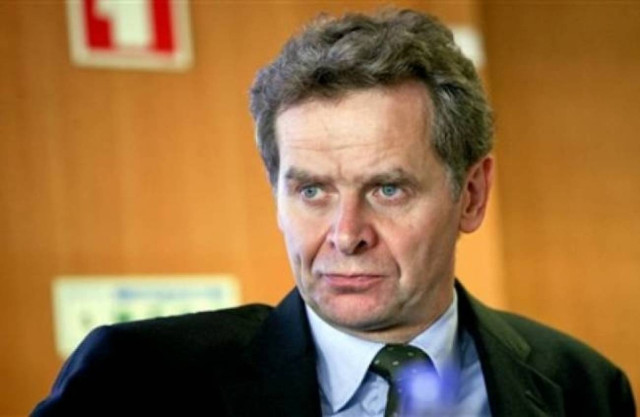
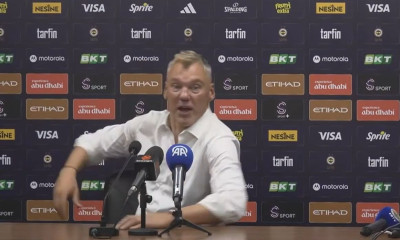
The IMF report, with its 5th assessment of Greek program, recorded "a number of challenges to be overcome" and "the necessity for reforms". The head of the Fund in Greece, Paul Thomsen, speaking at a press conference in Washington via teleconference, on the occasion of the publication of the report, underlined the "important steps" that have been made referring to the next review several issues, such as relief debt, the "funding gap" 2015-2016, the "possibility of a new loan", the capital needs of banks and other. He also appeared "open" for the "gradual reduction" of taxes, when fiscal targets aren't threatened.
He said: "And I certainly agree that the basic tax rates in Greece are too high and I think the right goal is to reduce them. Therefore, it's something that I would support strongly, but of course it must be achieved without compromising the achievement of financial targets". He didn't wish to comment on the government reshuffle and on political developments stressing he knows the new Minister of Finance, Gikas Hardouvelis.
"I look forward to working with him" he pointed out, while on Yiannis Stournaras he said he had a very good cooperation and didn't want to mention something about his possible appointment as head of the Bank of Greece. In regard of Haris Theoharis he reiterated that he doesn't want to comment on specific people noting the need for continuing efforts to progress the operation of the tax collection system.
For the banking system of Greece, he argued that "it's safe", while noting that "there is a difference" in IMF estimates for the capital needs of banks. For the sustainability of Greek debt he reaffirmed that it will be examined in the autumn adding that "further actions" from Greece and the Europeans are needed without ruling out further elongation and reduction in interest rates. Asked about the possibility of a "new loan" to cover the "financing gap" of next year he said that our country has the potential to avoid this if it remains in markets and advances development without excluding the possibility of using part of the funds to recapitalize banks after the stress tests.
Regarding the "fiscal gap" of 2015-2016 he argued that IMF wants to cover it "through structural interventions" in tax administration and public administration, and that the objective is to avoid horizontal measures that would lead to cuts in wages and pensions. He added that the Fund believes that some tax measures "should be extended" and that a decision would be taken in the autumn with the new budget. In fall, he said, IMF will return to Athens. In the IMF report, in general, are recorded as other examples of "good omens" of progress: The surplus in the external balance of the country and the primary surplus, improved investor sentiment and the readiness of the economy to recover in 2014, after six years of deep recession.
On the "challenges to be overcome" and "change" to be achieved, so that Greece can continue to return to "a path of sustainable and balanced growth" it mentions: The need for additional measures worth 5.7 billion euros, in order to close the "fiscal gap" of the 2015-2016 biennium, measures for the debt, which will reach 127.7% of GDP in 2020 to 117.2% of GDP in 2022 noting the cooperation of European partners., the path for the correction of the excessive deficit procedure should aim to achieve a general primary surplus of at least 2.75 billion (1.5% of GDP) in 2014, 5.65 billion (3% of GDP) 2015 and 8.9 billion euros (4.5% of GDP) in 2016., ensuring primary surplus to control spending on wages, pensions and benefits to the State, removing restrictions in the next revision of collective redundancies, based on the objectives set.
Such a development would "significantly improve" the investment climate, according to the report's authors. Also it asks for the active intervention in tax collection mechanism and the review of the matter for "further reform" on pensions for the sustainability of the pension system. The pension costs remain at very high levels (17% of GDP), as it notes. The report continues referring to changes in the minimum wage and the status of "wage ripening" for the long term unemployed, in order for businesses to get an incentive for hiring, the of cover capital needs of banks until the end of June 2014, under the "baseline scenario", the readiness of the government to take the necessary steps to "safeguard financial stability and maintaining the model of the four pillars of banking".
The IMF report also records findings-recommendations for the present and future state of the Greek economy, including: The Greek economy will grow in 2014 at a rate of 0.6% of GDP, after six years of deep recession and a rate of 2.9% of GDP in 2015, the banking sector may need additional funds, as non-performing loans are now a serious threat to the ability of Greek banks to support the recovery. The capital requirements are calculated in accordance with the report's authors, at 6.4 billion euros and 9.4 billion euros, based on the "worst case scenario" and that "there is no immediate risk to the stability of the banking system".
Also, the capital stock of the EFSF will remain intact until the completion of the stress tests, its main aim, if necessary, to meet additional capital needs, unemployment rose from 18% in 2011 to 27% in 2013, the "current estimates" show a "deficit" for 2015, which the authorities intend to first meet with the extension measures expire, including "solidarity levy", structural reforms progress unequally when they do,, the fall in housing prices rose by 22% in 2011 to 49% in 2013, non-performing loans increased from 22% in 2011 to 35% in 2013 and exports aren't yet a strong driver of growth, unlike other countries in the European region, something that shows that structural reforms are far away from the need to achieve a more stable improvement of investor sentiment.
For the privatizations, the revenue target for 2014 has been reduced from 2.7 billion to 1.5 billion and that the bulk of this decline will be recovered in time from 2015 to 2016, for the revenue from privatization until 2022 its determined to be at 22.4 billion euros, and that "current data" leaves no room for "remarkable increase" in wages and pensions from current levels for the period up to the national elections of 2016, while signs of improvement "finally appear" on the tax administration and the challenge continues to be a "critical risk" for the program.