India–EU FTA: A Strategic Economic Opportunity Waiting to be Unlocked
A comprehensive FTA could potentially double the bilateral trade in five years and unlock new areas of cooperation
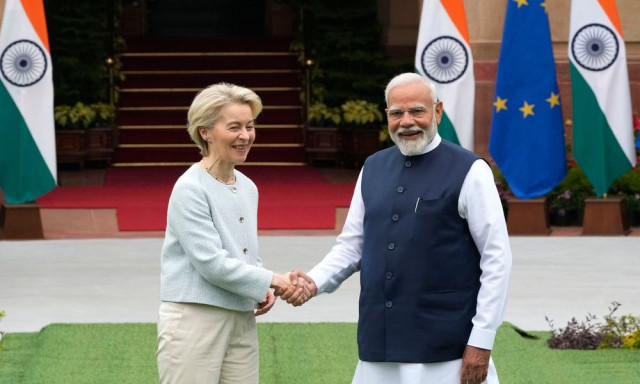
India and the European Union (EU) have nurtured a strong and evolving economic relations rooted in shared democratic values, strong complementarities, and a long-term vision of mutual prosperity. As the global trade architecture undergoes a profound transformation, driven by shifting supply chains, worsening -geopolitical conflicts, and sustainability imperatives, the proposed Free Trade Agreement (FTA) between India and the EU presents an unparalleled opportunity to redefine their economic partnership in the new global economic order.
India’s trade engagement with the EU dates back several decades, but the most significant turning point came in 1994 with the signing of the India–EU Cooperation Agreement. This accord laid the foundation for structured political and economic dialogue and paved the way for deeper commercial cooperation. Throughout the 2000s and early 2010s, India liberalized its trade regime and embraced global markets, leading to a surge in trade with the EU.
By 2006, India’s exports to the EU stood at approximately USD 25 billion, and by 2018, they had nearly doubled. The trade basket expanded from traditional textiles and apparel to include pharmaceuticals, chemicals, auto components, and information technology services. Services trade witnessed rapid growth, with India consistently maintaining a surplus, particularly in IT and consulting.
In recognition of this economic convergence, negotiations for a Broad-based Trade and Investment Agreement (BTIA) were launched in 2007. However, due to disagreements over tariff liberalization, intellectual property, and regulatory standards, talks stalled in 2013. Despite the pause, bilateral trade and investment ties remained resilient and diversified.
The post-COVID era provided a renewed impetus to reimagine global partnerships. Recognizing the need for resilient supply chains and strategic diversification, India and the EU revived FTA negotiations in 2021. This time, the scope was broader and more forward-looking. Beyond trade in goods, the new talks aimed to cover services, investment protection, e-commerce, data governance, sustainability, and climate cooperation.
The momentum received a further boost in March 2024 when India signed a landmark Trade and Economic Partnership Agreement (TEPA) with the European Free Trade Association (EFTA), comprising Switzerland, Norway, Iceland, and Liechtenstein. The TEPA, India’s first FTA with a European economic bloc, is expected to act as a catalyst for the India–EU FTA.
In early 2025, diplomatic exchanges intensified with high-level meetings aimed at addressing critical issues impeding the FTA. Discussions focused on India’s tariff structures, particularly on automobiles, wines, and dairy products. European concerns about sustainability and climate alignment, and India’s expectations around professional mobility and data adequacy. These exchanges underscored a shared political commitment to conclude the agreement, albeit with an understanding of its complexity.
India’s trade trajectory with the EU over the past decade reflects steady growth trajectory. In the financial year 2014–15, India exported goods worth approximately USD 49.3 billion from the EU and imported about USD 48.3 billion with a total trade of USD 97.3 billion. The bilateral trade in goods expanded substantially with EU in 2024-25 at USD 136.4 billion showing a growth of more than 40% with exports expanding to USD 75.75 billion and imports at USD 60 billion with a trade surplus of about USD 15.75 billion.
The top 10 items of exports and imports with EU include include a variety of goods, with machinery and transport equipment, chemicals, and manufactured goods. India's top 10 import items from the EU include machinery and transport equipment, chemicals, manufactured goods, and mineral fuels. Specifically, India imports electrical machinery, organic chemicals, machinery (including nuclear reactors and boilers), mineral fuels, and manufactured goods. India-EU also hold a strong trade trajectory of more than USD 50 billion with India in a trade surplus with EU. The bilateral trade in goods and services is expected to double within the five years of comprehensive Free Trade Agreement with EU
Alongside trade, investment flows between India and the EU have expanded considerably. The EU is India’s largest source of foreign direct investment (FDI), accounting for nearly 16 percent of total FDI inflows since 2000. As of December 2024, the cumulative EU investment stock in India stood at approximately USD 119 billion, marking a sharp rise from around USD 91 billion in 2019. In the fiscal year 2024–25 alone, EU investments in India exceeded USD 17 billion.
These flows have been directed towards high-growth sectors such as automotive manufacturing, renewable energy, pharmaceuticals, and digital infrastructure. Major European companies including Airbus, Siemens, Schneider Electric, and Bosch have not only expanded their Indian footprint but have also actively participated in technology transfers and skill development initiatives.
Conversely, Indian investments in the EU have also shown a steady rise, reaching an estimated USD 11.2 billion by 2024. Indian firms such as Tata Motors, Infosys, Sun Pharma, and Wipro have made strategic investments into the European market through greenfield investments, joint ventures, and acquisitions.
These ventures span across sectors such as automotive, life sciences, financial technology, and business consulting. This two-way investment flow reflects growing mutual confidence and underlines the interdependence of the two economies.
As of 2025, the India–EU FTA negotiations have entered an advanced phase, though several complex issues are expected to come at conclusions soon. The EU is seeking substantial tariff cuts on sectors like automobiles and alcoholic beverages, India, in return, wants more liberal visa policies, mutual recognition of professional qualifications, and assurance on its data protection framework being deemed adequate under EU standards. A particularly contentious issue is the EU’s Carbon Border Adjustment Mechanism (CBAM), which imposes levies on carbon-intensive imports such as steel and cement.
Despite these challenges, both sides are exploring a phased or modular approach. A possible roadmap involves signing an “early harvest” agreement covering low-sensitivity sectors such as textiles, pharmaceuticals, machinery, and IT services, followed by gradual liberalization in more sensitive areas. The successful implementation of the India–EFTA TEPA can offer useful lessons and establish trust around dispute resolution, labour standards, and environmental safeguards.
Looking ahead, the future of India–EU bilateral economic relations appears promising. The EU is India’s second-largest trading partner and a key source of capital, innovation, and clean technology. A comprehensive FTA could potentially double bilateral trade within five years and unlock new areas of cooperation. Digital trade stands out as a particularly promising domain, given India’s prowess in IT and the EU’s technological depth. Moreover, both partners are committed to climate goals under the Paris Agreement. This opens avenues for collaboration in green hydrogen, solar energy, electric vehicles, and circular economy models.
Strategically, the India–EU partnership also serves as a hedge against rising protectionism and supply chain vulnerabilities. Amid growing geopolitical uncertainties, a robust India–EU economic corridor would not only strengthen regional stability but also reinforce global rules-based trade. The FTA, once concluded, could serve as a model for equitable, development-friendly trade agreements between developed and emerging economies.
In conclusion, the proposed India–EU Free Trade Agreement holds transformative potential. While there are several hurdles to overcome, the long-term strategic and economic benefits make a compelling case for its early conclusion. A well-designed FTA would not only boost trade and investment but also enhance innovation, sustainability, and geopolitical cooperation. With sustained political will, stakeholder engagement, and creative diplomacy, the India–EU FTA could emerge as a landmark pact, reshaping global trade dynamics and advancing shared prosperity.