Indus Water Treaty suspension catches Pakistan off-guard; Aggravates water crisis
New Delhi blamed Pakistan for the deadly terror attack in Jammu & Kashmir’s Pahalgam on April 22 and held the treaty until Pakistan abjures cross-border terrorism
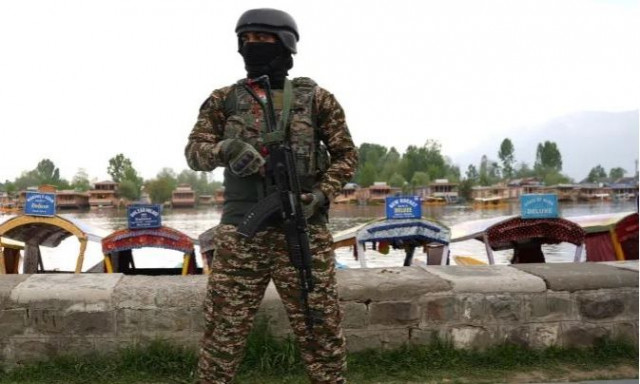
The initial signs of the suspension of the Indus Water Treaty (IWT) are visible now. The water level of the River Chenab was reduced soon after India pulled the plug on the IWT as a punitive action against Pakistan for supporting cross-border terrorism. Pakistan has already been experiencing a severe water crisis due to climate change, less rainfall, and overexploitation of groundwater, and the situation is going to get much worse as India suspends the IWT.
Reports suggested a reduction in the water flow from India and Pakistan. Social media platforms are abuzz with a video shared by a local from Pakistan’s Sialkot, in which he can be heard saying that the water level has gone down by three feet. He stated that India followed through on its threats, as water levels depleted very quickly soon after the suspension of IWT.
Satellite images of Marala Headworks in Punjab’s Sialkot taken on April 21 and April 26 showed an increase in silt and sedimentation in the Chenab River. "The water flow as observed on comparative satellite images indicates decrease in the flow of water channels emanating from the headworks have reduced in size and one has totally dried up," said Colonel Vinayak Bhat (retired), an imagery interpretation specialist. “This indicates storage of water in India after suspension of the IWT."
IWT suspension has created a ruckus among the people as Pakistan is completely dependent on the water of the Indus, Jhelum, Chenab, Ravi, Beas, and Sutlej which flow through India. Pakistani farmers are worried. Nadeem Shah, farmer from Sindh, said “We have trust in God, but there are concerns over India's actions." Another farmer Homla Thakhur said entire Pakistan would turn into a desert if water is stopped by India. "We'll die of hunger," he said.
New Delhi blamed Pakistan for the deadly terror attack in Jammu & Kashmir’s Pahalgam on April 22 and held the treaty until Pakistan abjures cross-border terrorism. The Resistance Front (TRF), an affiliate of Pakistan-based Lashkar-e-Tayyiba (LeT), has taken responsibility for the Pahalgam attack in which 26 tourists were gunned down.
For Pakistan, the implications of the IWT suspension could be far-reaching as it would disrupt irrigation rhythm and crop cycles, aggravate inter-province tensions, destroy coastal livelihoods and reduce hydropower generation, said Hassaan F Khan, Assistant professor at Tufts University. “The Indus Delta is already shrinking due to reduced freshwater outflows. Further uncertainty in upstream flows could accelerate that degradation. If upstream flows are reduced or poorly timed, it could cut into generation capacity. None of this is speculative. Pakistan is already a water-scarce,” he said.
The undercurrents of potential damages are being felt in Pakistan. Many experts and bureaucrats have forecasted a bigger conflict as the IWT suspension has picked Pakistan by the neck. Dr Hassan Abbas, a Distinguished Professor at Washington-based National Defence University called it “water warfare” which could destroy Pakistan’s agriculture and food security.
The intensity of the issue can be gauged from Pakistani leaders issuing threats of war with India. “Either water will flow in this Indus, or their blood will,” said former Pakistani Foreign Minister Bilawal Bhutto-Zardari. Pakistan has called the blockage of the water an “act of war” even as one minister has threatened India with nuclear bombing.
IWT managed to survive over the six decades of wars, military conflicts and confrontations. The successive Pakistani government however showed lax attitude toward finding alternate water management measures and underestimated India’s chances of suspending the IWT, said economist Vaqar Ahmed. Pakistani leaders failed to comprehend the strong possibility of such action even after Indian Prime Minister Narendra Modi hinted so in the past. “Blood and water cannot flow together,” he had said in 2016.
Pakistan is a highly water-stressed country and 80 percent needs are fulfilled by the rivers coming from India. Against such a backdrop, India walking away from the IWT would have serious and multidimensional consequences for Pakistan, making the country’s agriculture, drinking water supplies, coastal livelihoods and hydropower generation vulnerable. Pakistan may not be able to garner international support as India’s act is based on the country’s security and containing terrorism. Even as Pakistan approaches international bodies, it is likely to face difficulties in securing decisive international intervention.