Epirus, 1943: the Nazis wanted the division of the Greeks
The violence of the Nazis during the period 1943 to Epirus was brought into light by the Professor of the University of Ioannina, Athanasios Gotovos, who studied the files of the German Foreign Ministry and Wehrmacht, cities Koblenz and Freiburg, seeking the causes of atrocities and this region of Greece.
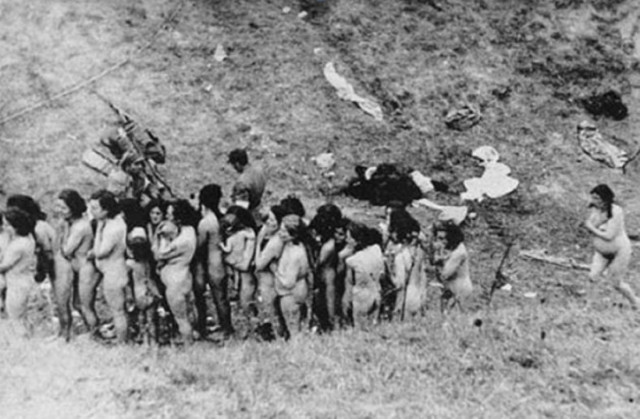
"The extreme and harsh measures, the ideology of racial superiority, the principle of collective guilt, the principle of zero tolerance towards non-compliance phenomena, to the general scheme, was the quintessence of Nazi violence," he said in an interview to the Greek News Agency.
The period from 10 July to 3 October 1943, when the holocaust of Ligkiades occured , considered the most bloody in Epirus .
The 1st Commando Division “Edelweiss”, after the invasion of Poland, France and the attack on the Soviet Union, leaves the Caucasus by train and arrives in the Balkans in March 1943. The commands initially were to destroy the rebel movement of Tito’s in Montenegro.
In late June begins the descent of Edelweiss in Epirus, in order to avoid another landing of the Allies in Western Greece as they were informed, according with the military documents.
The military extermination operations in Kommeno of Arta , the Ligkiades and Mousiotitsa of Ioannina , in Zagora, Pogoni, Paramithia and the 25 villages of the plain of Fanari in Thesprotia , but also in many other areas of Epirus , are among the hundreds of extreme criminal violence cases.
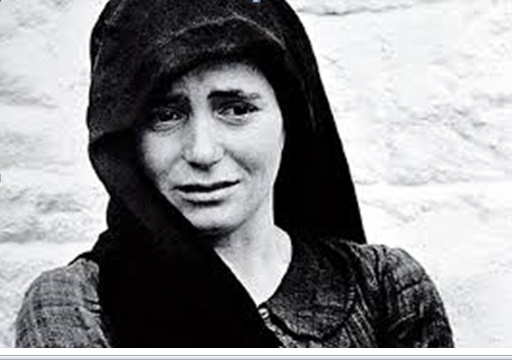
The answer to “why” is that retaliation was part of a planned policy of intimidation and not tantrum , neither individual overruns by German officers .
As stated by Mr. Gotovos ANA -MPA , the Wehrmacht goal was to break the resistance by exercising terrorism , and to promote divisive policy, through the killings of civilians in order to increase the "cost " of sabotage . " They tried to provoke attacks between the two resistance groups ELAS and EDES, but also creating rift between the population and the guerrillas that made sabotage " says professor and adds: " In German records, murderous acts, always presented as guerrillas’ battles and the dead appear in reports as “losses of the enemy” .The murdered civilians were presented in official reports either as rebels or as accomplices of the rebels. The phrase “killings of civilians in reprisal” does appear neither to military units’ orders, nor in official reports. Executions were taking place, but falsely entered as losses of the enemy during military extermination operations."