Ukraine mobilizes troops after Russia's “declaration of war”
Ukraine's new leaders accused neighbor Russia of declaring war, as Kiev mobilized troops and called up military reservists in a rapidly escalating crisis that has raised fears of a conflict.
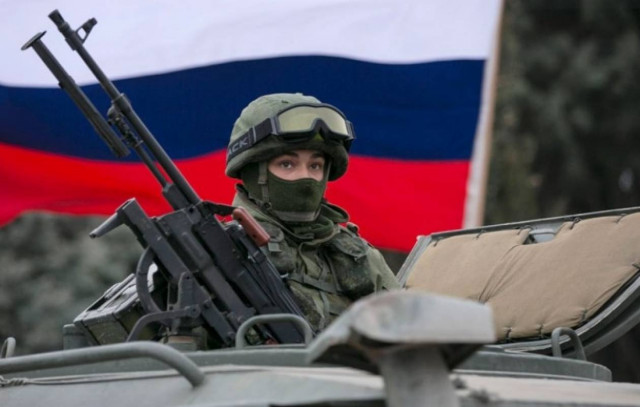
Amid signs of Russian military intervention in Ukraine's Crimean peninsula, Russian generals led their troops to three bases in the region Sunday, demanding Ukrainian forces surrender and hand over their weapons, Vladislav Seleznyov, spokesman for the Crimean Media Center of the Ukrainian Defense Ministry, told CNN.
Speaking by phone, he said Russian troops had blocked access to the bases, but added, "There is no open confrontation between Russian and Ukrainian military forces in Crimea" and said Ukrainian troops continue to protect and serve Ukraine.
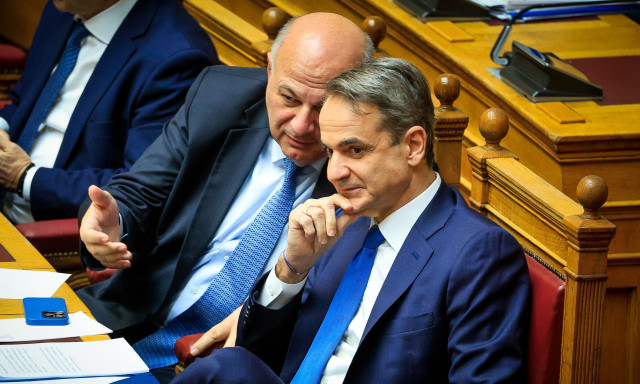
"This is a red alert. This is not a threat. This is actually a declaration of war to my country," Ukrainian interim Prime Minister Arseniy Yatsenyuk said.
Speaking in a televised address from the parliament building in the capital, Kiev, he called on Russian President Vladimir Putin to "pull back his military and stick to the international obligations."
"We are on the brink of the disaster."
Russia OKs military force in Ukraine Kiev: Russia's move is direct aggression
A sense of escalating crisis in Crimea -- an autonomous region of eastern Ukraine with strong loyalty to neighboring Russia -- swirled with U.S. Secretary of State John Kerry condemning what he called Russia's "incredible act of aggression."
Speaking on the CBS program "Face The Nation," Kerry said several foreign powers are looking at economic consequences if Russia does not withdraw its forces.
"All of them, every single one of them are prepared to go to the hilt in order to isolate Russia with respect to this invasion," he said. "They're prepared to put sanctions in place, they're prepared to isolate Russia economically."
But Ukraine's ambassador to the United Nations said his country needs more than diplomatic assistance.
"We are to demonstrate that we have our own capacity to protect ourselves ... and we are preparing to defend ourselves," Yuriy Sergeyev said on CNN's "State of the Union." "And nationally, if aggravation is going in that way, when the Russian troops ... are enlarging their quantity with every coming hour ... we will ask for military support and other kinds of support."
In Brussels, Belgium, NATO ambassadors held an emergency meeting on Ukraine.
"What Russia is doing now in Ukraine violates the principles of the U.N. charter," NATO Secretary General Anders Fogh Rasmussen told reporters.
"Russia must stop its military activities and threats," Rasmussen said. "We support Ukraine's territorial integrity and sovereignty. ... We support the rights of the people of Ukraine to determine their own future without outside interference."
Lean to the West, or to Russia?
Ukraine, a nation of 45 million people sandwiched between Europe and Russia's southwestern border, has been plunged into chaos since the ouster a week ago of of President Viktor Yanukovych following bloody street protests that left dozens dead and hundreds wounded.
Anti-government protests started in late November when Yanukovych spurned a deal with the EU, favoring closer ties with Moscow instead.
Ukraine has faced a deepening split, with those in the west generally supporting the interim government and its European Union tilt, while many in the east prefer a Ukraine where Russia casts a long shadow.
Nowhere is that feeling more intense than in Crimea, the last big bastion of opposition to the new political leadership. Ukraine suspects Russia of fomenting tension in the autonomous region that might escalate into a bid for separation by its Russian majority.
Ukrainian leaders and commentators have compared events in Crimea to what happened in Georgia in 2008. Then, cross-border tensions with Russia exploded into a five-day conflict that saw Russian tanks and troops pour into the breakaway territories of South Ossetia and Abkhazia, as well as Georgian cities. Russia and Georgia each blamed the other for starting the conflict.