Military Command and Social Engineering Pakistan’s Demographic Gamble
Population growth is not simply a matter of issuing directives on birth control or imposing compliance through bureaucratic pressure, it is deeply connected with poverty, women's autonomy, religious narratives, access to health services and the perceived legitimacy of the state
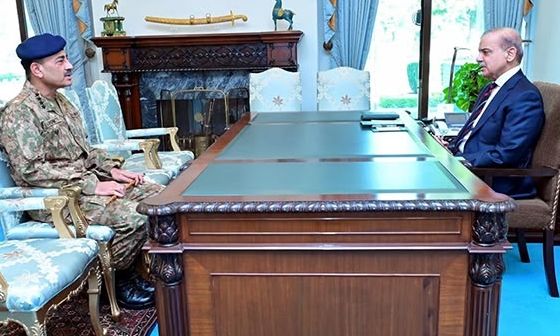
The Dawn report shows that after more than three years of ineffective efforts to manage population growth the federal government now pins hopes on Field Marshal Munir through a high level committee on population management chaired by Prime Minister Shehbaz Sharif. This move symbolically elevates population control to the level of a national security challenge and operationally inserts the military leadership into what is fundamentally a social governance problem involving health education, gender equality and economic planning. The health minister’s public framing of this step underscores the belief in Islamabad that military authority and hierarchical discipline can succeed where civilian institutions have failed.
This logic fits into a long tradition in Pakistan where the state has sought to address political economic and social challenges through top down securitised approaches rather than participatory governance and policy driven reform. From earlier family planning drives under military regimes to more recent campaigns on polio and internal security the state has repeatedly tried to translate complex human behaviour into targets orders and enforcement mechanisms In each case operational gains have been fragile while underlying social attitudes, institutional weaknesses and governance deficits have remained largely unaddressed.
Population growth is not simply a matter of issuing directives on birth control or imposing compliance through bureaucratic pressure, it is deeply connected with poverty, women's autonomy, religious narratives, access to health services and the perceived legitimacy of the state. Previous attempts to control fertility through technocratic campaigns or coercive incentives have generated resistance among communities particularly when framed as externally driven or elite imposed policies. When the military is placed at the apex of such efforts the policy easily acquires the character of social engineering from above rather than inclusive development from below.
Historically, Pakistan’s reliance on military command structures for internal challenges has produced short term discipline without durable transformation whether in counterterrorism counterinsurgency or emergency governance. Operations have frequently stabilised symptoms while leaving root causes such as political exclusion, uneven economic growth and weak civil institutions intact The repeated recourse to the security apparatus has also crowded out civilian capacity building and created an expectation that the uniformed leadership will fix every problem from foreign policy to economic management and now demographic trends.
The current population management initiative risks replicating these failures at a societal scale. A committee anchored around a field marshal may be able to push bureaucracies into compliance, compile metrics and enforce targets yet it cannot manufacture community trust or shift deeply embedded norms about family size and reproductive health. Rather than empowering local governments, health workers, educators and women’s organisations this model centralises authority at the federal and military level and depends on hierarchy instead of participation.
The more the military is seen to own demographic policy the easier it becomes for sceptical groups to portray population control as an elite security project rather than a development necessity. In a context where civil-military relations are already contested and where many citizens view the security establishment as overbearing, this association may erode the social buy-in critical for any large-scale behavioural change. Demography cannot be managed like a border crisis but it demands persuasion incentives, rights based frameworks and credible service delivery.
Another nuance is institutional crowding out when the government publicly advertises that it has failed to control population growth for three years and now turns to a field marshal it implicitly signals that civilian ministries are inadequate and that ultimate problem solving authority lies with the khaki leadership. This discourages investment in health governance planning capacity and local administration while reinforcing a dependence on military tutelage for non military issues Over time such patterns weaken the very institutions that are necessary for sustainable social policy including long horizon demographic management.
The demographic challenge further intersects with economic stress, climate vulnerability and urbanisation all of which cannot be restructured through command channels alone. Rising population exerts pressure on job markets, water food security and public services and mitigation requires integrated planning across education, labour health environment and fiscal policy. When the solution set is narrowed to what a committee led by a field marshal can order, measure and monitor, the state will likely privilege visible compliance campaigns over the difficult work of structural reform.
Given Pakistan’s record of securitising social issues and the complex drivers of fertility trends the present approach is likely to generate more symbolic reassurance than substantive change. It allows the political leadership to claim decisive action by invoking the highest military authority yet it does not answer how to reshape incentives for families, improve women’s access to education and employment or build a robust primary health system. As with previous exercises in command and control governance the initiative may produce short term activity plans and media messaging but it will probably fall short of delivering the sustained socially rooted transformation that genuine population management demands.
[3] https://www.dawn.com/news/2014245
[4] https://www.dawn.com/news/1908070