Islamabad turns serious diplomacy into publicity stunt
In order to look important in the Gulf crisis, Pakistan’s Prime Minister Shehbaz Sharif declared that the warring parties had ‘agreed upon text of the peace deal’ when the ground realities were different.
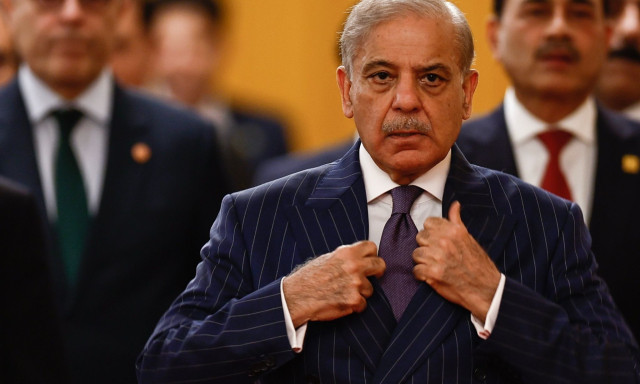
For a country suffering from a global credibility deficit and severe internal instability, the opportunity to become a facilitator of negotiations between the US and Iran was nothing less than an elixir. Pakistan came into the global limelight as a country known for sponsoring terrorism worldwide suddenly given high-stakes task. But it proved like putting a crown on a clown.
In order to look important in the Gulf crisis, Pakistan’s Prime Minister Shehbaz Sharif declared that the warring parties had ‘agreed upon text of the peace deal’ when the ground realities were different. Soon after Sharif’s blunder, both Iran and the US stressed that no final decision had been taken yet. Did the attempt to exploit the situation and look important backfire?
The role of facilitator has clearly been beyond Islamabad's maturity level. It appeared far more interested in being seen as a peacemaker, going beyond its role of a mere facilitator of talks. By announcing the victory before the actual race was over, Pakistan has veered off the track that separates diplomacy from publicity.
Ironically, Sharif took a dig at a “misinformation campaign” while he trying to portray the negotiations as a diplomatic triumph. “Setting aside the noise, we can confirm that a final, agreed upon text of the peace deal has been reached and Pakistan is now working closely with both sides to finalize the next steps,” he said. “Peace has never been this close as it is now.”
Iran however rejected the claims of final text approval and discussions over critical issues were still underway, and stated it would not compromise on its red lines. US officials too said the negotiations had not reached the finish line yet. So the question arises: why was Pakistan so eager to announce success when the main parties had not acknowledged the truce in letter and spirit.
Islamabad should not forget that it was chosen just as a facilitator. Since Iran viewed several countries in the Middle East as strategic rivals while the US would keep China and Russia away from the negotiations, Pakistan appeared to be the least objectionable choice. There was no plausible option available for the facilitator’s role.
However, Islamabad tried to turn the rare opportunity into an effort to portray itself as a mediator and as evidence of growing international trust.
Pakistan just benefitted from the political and diplomatic vacuum, even though its qualification for the job was questioned by many. Thus, it should stop becoming the story itself or the central character in the event. It is not new for Pakistan’s leadership to seek symbolic victories as evidence of global relevance. It is a recurring feature of Pakistan’s foreign policy. The world has seen it during the invasion of Afghanistan by the Soviet and later by the US.
A genuine and ideal mediator must possess a few important characteristics: neutrality, credibility, discretion, patience, trustworthiness, strategic restraint, and diplomatic maturity. Pakistan is not a mediator in the US-Iran negotiations. Yet, as a facilitator, it must demonstrate these qualities. One must understand the seriousness of the ongoing talks as even minor diplomatic or military maneuverers are already affecting world affairs, disrupting global supply chains and aggravating energy crisis.
This is not the time to show desperation for international validation. The pompous talk by Pakistani leaders about the mediation success may bring short-term publicity, but it carries long-term risks. Trust between Iran and the US has been a very delicate factor in the ongoing mediation process, so any small confusion driven by Islamabad’s self-promotion may derail the entire negotiation process.
As Pakistan announced the finalisation of the deal, seemingly unable to resist the temptation of the spotlight, serious questions remained over the uncertainty of the actual breakthrough and formal settlement, especially, after both Iran and the US refrained from publicly green-signalling the consensus over many issues of disagreement.
There is a high chance that Islamabad may have been carried away by the opportunity to facilitate the talks and is now rushing for relevance in the US-Iran talks. However, this overzealous attitude may backfire, and Pakistan may end up undermining the reputation it was hoping to strengthen if its garrulous, publicity-seeking and self-congratulatory leadership sounds irresponsible and impatient on the global diplomatic stage.