Amphipolis: What do Caryatids hide and reveal
How difficult is to finally be dated these beautifully forms? What do their toes reveal?
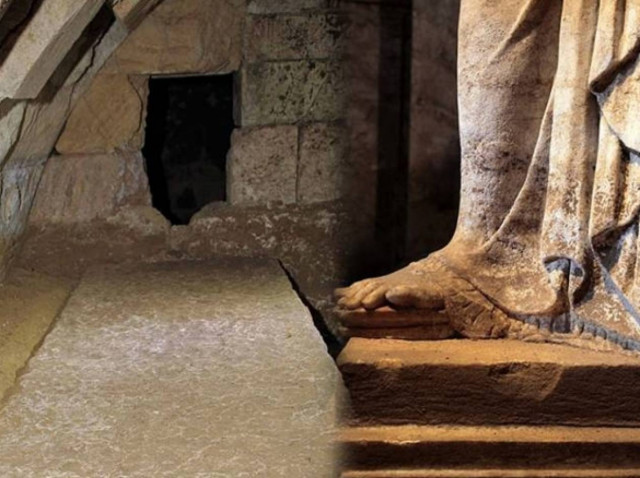
The Caryatids which were found in Amphipolis cause awe and the full-length photographs went worldwide, in minutes.
How difficult is to be dated?
"We do not expect the Caryatids to dating the tomb. The dating of sculptures is the most difficult part in archaeological findings. They must be cleaned, photographed, examined by specialists, in order to hear different opinions", says in "Kathimerini" newspaper the professor of Classical Archaeology at the University of Athens, Panos Valavanis. He argues that two things play an important role. The one is the fact that Caryatids are archaistic, i.e. have elements that are older than the time when were sculptured.
The second is that they come from a local workshop, for which, however, we have no knowledge concerning its working period. "Tombs are not dated by their sculptural decoration but the offerings (if found) and from the excavation itself: The soil and stratigraphy."
He also explains that the sculptor could come from a provincial workshop, but could be an important artist of Macedonia, without this to mean that belonged to the official sculptors of Alexander the Great. Mr. Valavanis, however, is concerned by the fact that there has been no door, until now.
"Is unreasonable for a tomb chamber to be without a door" he says.
What do their toes reveal?
The archaeologists are trying to answer in the questions cautiously, in order to reveal the big secret hidden in the tomb.
According to some archaeologists, the morphology of the lower limbs of Caryatids, conspicuously states their Greek identity. Other archaeologists, however, are much more cautious noting that what is called "Greek foot" in sculpture may support the idea of the Roman origin of the Caryatids.
As seemed when the pedestals came into light, the Daughters of Amphipolis could be a model of a rule of sculpture: The middle toe of the statues is longer than the big toe. Also, the third finger is substantially smaller. This is a feature that remained in the history of art as "Greek foot".
The longest middle toe, considered sample of noble origin, a belief that was reinforced, spread and prevailed mainly during the conquests of Alexander the Great. In clear distinction from the "Egyptian foot" (in which the big toe extends), the "Greek foot" was presented often even in Egyptian art, especially after the dynasty founded by Ptolemy, the Macedonian general of Alexander.
However, as experts in ancient sculpture point out, the "Greek foot" of Caryatids, was common, both before the heyday of the Macedonians and long after it.
Mendoni: The architects of the tomb had taken measures against looters.
"The constructors had taken measures to avoid grave robbing" emphasized the general secretary of Culture, Lena Mendoni, reported in the excavation of Amphipolis.
She also added that the need for support was "not due to the fact that the tomb was not in good condition, but because of the structure of the construction of the chambers which had been filled with river sand," in an effort to deter looting.
Mrs. Mendoni however said that "the excavation wants time" and added: "We do not know yet what lies in the third chamber, in order to go in the fourth. The excavation is a strictly scientific process", she said.
"You cannot force it, but you can speed up by taking some concrete steps to protect workers and the monument," she added.
Finally, she said that in the monument has been erected a complete and modern construction site.